Present
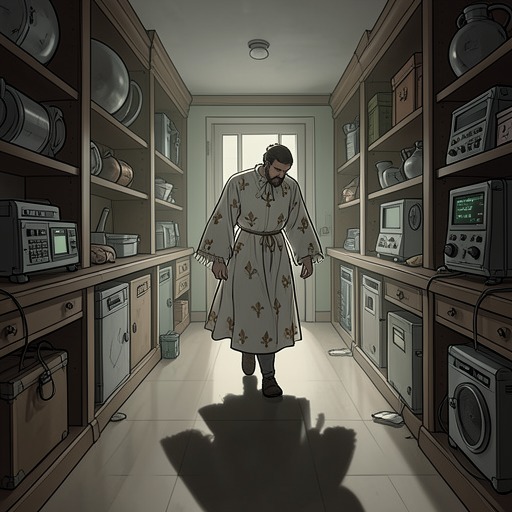
Being and NothingnessThe Present is not an instant in which consciousness simply coincides with what is. It is the For-itself’s active presence to being-in-itself: an internal relation that reveals the world while keeping consciousness distinct from what it encounters. As flight from what it is toward what it is not, the Present binds the temporal dimensions together and makes a world of co-present things possible.
Presence to Being
The Present first appears to resist definition. Ordinary speech treats what is present as what exists now, between what has passed and what is still to come. But if the present is divided until nothing remains but an infinitesimal instant, that limit is nothingness. The paradox repeats the book’s central pairing of Being and Nothingness: the Present seems to be, yet cannot be isolated as a self-sufficient piece of being. The soldier’s or pupil’s reply at roll call, “Present!”, clarifies the word’s force: to be present is to be present to something, rather than merely to occupy an instant.
The For-itself is present to a table, a room, Paris, and ultimately being-in-itself. This presence is not a reciprocal contact between self-contained things, nor a simple external relation of contiguity. It is an internal bond: the For-itself is joined to what it encounters precisely by not being that thing. It cannot rest in the self-contained mode of being-in-itself and then acquire presence as an accidental quality; it makes itself presence by existing as For-itself, and ceases to be presence if it ceases to be For-itself. Presence, in this account, is an ontological structure of consciousness.
That relation is at once intimate and negative. The For-itself adheres to being as closely as possible without identifying with it, witnessing itself among beings as not being them. If the bond lacked this difference, presence would collapse into identity; if there were no internal bond, no connection between the present consciousness and being could be established. The Present therefore “is not”: its characteristic is not absence from being but a way of being related to being through negation.
A World Made Co-present
The For-itself’s presence extends to all being-in-itself, not merely to whichever object happens to command attention. Its facticity places it here rather than elsewhere, but this location determines a perspective, not a privileged or exclusive presence. From that situated perspective, beings are disclosed together as a world. The For-itself is the condition under which objects can appear as co-present or separated; without that presence, the terms “together” and “apart” would not yet describe a relation among things.
This co-presence cannot be established by an outside witness. No third term, not even God, can stand between the For-itself and being to certify their presence to one another; the relation must already be there for it to be known. The For-itself is thus its own witness of co-existence, directed beyond itself toward being and bound to it without becoming identical with it. The world’s unity is neither a property lodged in things individually nor a neutral container that exists independently of consciousness. It is disclosed through the For-itself’s presence to the totality of being-in-itself.
Flight Rather Than an Instant
The Present’s non-being follows from the For-itself’s mode of existence. Unlike a thing whose being is wholly identical with itself, consciousness exists across a separation: what reflects and what is reflected do not settle into a self-contained object. Its relation to being is an internal negation. The For-itself exists by revealing itself as not being the being toward which it is directed, and the Present is this negation in its temporal form.
Consequently, the Present is not a stationary point from which consciousness observes the world. It is a perpetual flight in the face of being: a making-itself-present that escapes any instant in which it might finally coincide with itself. A clock hand may point to nine, and the For-itself may be present to that hand, but it is misleading to say that consciousness simply “is” nine o’clock. The clock’s measurable position belongs to the being encountered; the Present is the escaping relation to it. The instant is an abstraction imposed by treating the For-itself as though it were a thing that simply is.
This flight also opens in two directions. The For-itself is behind itself as its Past and ahead of itself as its Future. It is not what it is in the mode of the Past, and it is what it is not in the mode of the Future. The Present thus has no isolated substance of its own: it is the movement by which consciousness escapes the being with which it is co-present and projects beyond what it has been.
Motion and the Present of the World
Being-in-itself, considered by itself, contains neither a future nor a present in the For-itself’s sense. A crescent moon is simply what it is; only when it is apprehended in a world revealed to human reality can it appear as a full moon to come. Likewise, motion is not deduced from the essential nature of things. It is a contingent fact: a thing moves while remaining identifiable through its change of place, rather than undergoing an alteration so radical that there is no longer anything whose motion can be followed.
Motion matters because permanent being alone does not disclose a distinguishable Present. Where nothing changes or moves, what is cannot be differentiated from what was by reference to the thing itself. Motion provides the For-itself with a way to apprehend the present dimension of universal time. Its passage is evanescent: like a ship’s fading wake, what has just occurred recedes into the Past; what is still to come has not yet arrived; and what appears in motion is already surpassed as it appears. Sartre compares the moving present to the steady progression of a lizard on a wall: it is neither securely fixed as being nor simply absent, and it is exterior to itself almost as soon as it appears.
The moving body thereby gives the For-itself a worldly image of its own temporal structure. Through the present of a moving body, consciousness makes its own Present known to itself. The motion’s successive positions are exterior to one another, and this externality grounds the division of time into instants. In that sense motion does not merely happen within an already complete temporal present; it helps realize universal time for a For-itself that apprehends its own present through movement.
Temporality, Body, and Meaning
The Present is inseparable from Past and Future. None of the three dimensions has ontological priority; each conditions and is conditioned by the others. The For-itself is temporal because it nihilates itself across all three: it has to be its Past, flees in the Present, and is haunted by the Future toward which it projects itself. The Present is not prior to the other dimensions, but it supplies the indispensable form of non-being through which their synthetic unity takes shape. Temporality is therefore not a universal container or an external law imposed on human reality; it is the internal structure of the For-itself’s mode of being.
The body makes this structure concrete. In perception and action, the body is the immediate point of view and point of departure from which the For-itself goes beyond what is given. It is already surpassed toward a newly perceived object or a new arrangement of instruments, yet it remains the factical center from which that surpassing begins. As the immediate Past that still touches the Present as it flees, the body is at once what the For-itself is and what it exceeds. Its contingency is necessary to situated action: the For-itself must have a particular point of departure if it is to surpass a world from within a particular perspective.
The same temporal pattern governs the perception of another person. A man walking is understood not as an isolated sequence of visible positions but through the spatial-temporal ensemble toward which his movement points: an alley, a street, a sidewalk, shops, and cars. The walking is apprehended from its anticipated goal back toward its present movement. The arm in motion also refers to a past limit—the arm at rest—which is never directly seen as the substance of motion but is invoked as what the movement surpasses. That immobility is pure facticity, disclosed through the movement that carries beyond it. The Present is therefore not only an abstract account of consciousness and time; it also describes how bodies, actions, and meaningful movement become intelligible.
In its concise formulation, the Present is presence to being, but presence as negation and flight. It reveals being without turning consciousness into a thing, gathers beings into a world without making their existence depend on a reciprocal relation among objects, and gives motion a temporal significance through the For-itself’s apprehension. Its apparent immediacy conceals a more complex structure: the Present exists only as the passage between what consciousness has to be as its Past and what it projects itself toward as its Future.